
Improving Fuel Economy
The following instructions will help you improve fuel economy.
Avoid excessive idling
If you are to wait for more than a minute while you are parked, stop the engine and start it again later. When warming up a cold engine, allow the engine to idle until the temperature gauge pointer comes up to the “C” position. In this position, the engine is sufficiently warm for starting off.
Avoid “jackrabbit” starts
Fast starts away from lights or stop signs will consume fuel unnecessarily and shorten engine life. Start off slowly.
Avoid unnecessary stops
Avoid unnecessary deceleration and stopping.
Try to maintain a slow, steady speed whenever possible. Slowing down and then accelerating again uses more fuel.
Keep a steady cruising speed
Keep as constant a speed as road and traffic conditions will permit.
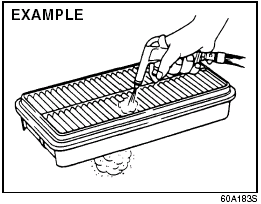
Keep the air cleaner clean
A dirty air cleaner will cause the fuel injection system to supply too much fuel to the engine for the amount of air being supplied.
The result is waste of fuel due to incomplete fuel burning.
Keep weight to a minimum
The heavier the load, the more fuel the vehicle consumes. Take out any luggage or cargo when it is not necessary.
Keep tire pressure correct
Underinflation of the tires can waste fuel due to increased running resistance of the tires. Keep your tires inflated to the correct pressure shown on the label located below the driver’s side door latch striker.
See also:
Driving Tips
WARNING:
• Wear Your Seat Belts at All Times.
Even though air bags are equipped
at the front seating positions, the
driver and all passengers should
be properly restrained at all times,
usi ...
Vehicle Overview
The Suzuki SX4 is derived from an established overseas model, the Swift. It's
available as a front-drive sedan and SportBack hatchback, and the Crossover
hatchback comes with standard all-wheel dr ...
If the Starter Does Not Operate
1) Try turning the ignition switch to the
“START” position with the headlights
turned on to determine the battery condition.
If the headlights go excessively
dim or go off, it usually means th ...