
Battery
Battery

WARNING:
Batteries produce flammable hydrogen
gas. Keep flames and sparks
away from the battery or an explosion
may occur. Never smoke when working
near the battery.
WARNING:
When checking or servicing the battery,
disconnect the negative cable.
Be careful not to cause a short circuit by allowing metal objects to contact the battery posts and the vehicle at the same time.
WARNING:
To avoid harm to yourself or damage
to your vehicle or battery, follow the
jump starting instructions in the
“EMERGENCY SERVICE” section of
this manual if it is necessary to jump
start your vehicle.
WARNING:
Battery posts, terminals and related
accessories contain lead and lead
compounds. Wash hands after handling.
Your vehicle is equipped with a battery that requires infrequent maintenance. You will never have to add water. You should, however, periodically check the battery, battery terminals and battery hold-down bracket for corrosion. Remove corrosion using a stiff brush and ammonia mixed with water, or baking soda mixed with water. After removing corrosion, rinse with clean water.
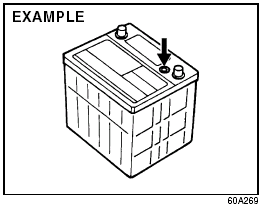
The test indicator on the top of the battery provides information on the condition of the battery.
If your vehicle is not going to be driven for a month or longer, disconnect the cable from the negative terminal of the battery to help prevent discharge.
See also:
Daily Inspection Checklist
Before Driving
1) Make sure that windows, mirrors, lights
and reflectors are clean and unobstructed.
2) Visually check the tires for the following
points:
– the depth of the tread groove.
– ...
Modification Warning
WARNING:
Do not modify this vehicle. Modification
could adversely affect safety,
handling, performance or durability
and may violate governmental regulations.
In addition, damage or performance
...
2WD/i-AWD (intelligent All Wheel Drive) Switch (if equipped)
2WD/i-AWD (intelligent All Wheel Drive) Switch (if equipped)
The 2WD/i-AWD switch is located on the
center console.
For details on how to use the 2WD/i-AWD
switch, refer to “Using the 2WD/i-AW ...