
Seat Adjustment

WARNING:
Never attempt to adjust the driver’s
seat or seatback while driving. The
seat or seatback could move unexpectedly,
causing loss of control.
Make sure that the driver’s seat and seatback are properly adjusted before you start driving.
WARNING:
To avoid excessive seat belt slack,
which reduces the effectiveness of
the seat belts as a safety device,
make sure that the seats are adjusted
before the seat belts are fastened.
Adjusting Seat Position
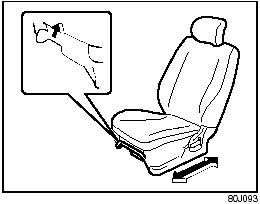
Front seat
The adjustment lever for each front seat is located under the front of the seat. To adjust the seat position, pull up on the adjustment lever and slide the seat forward or rearward. After adjustment, try to move the seat forward and rearward to ensure that it is securely latched.
Adjusting Seatbacks
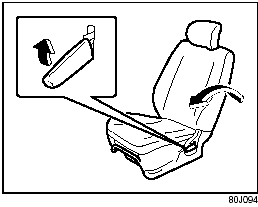
Front seat
To adjust the seatback angle of front seats, pull up the lever on the outboard side of the seat, move the seatback to the desired position, and release the lever to lock the seatback in place. After adjustment, try moving the seatback to make sure it is securely locked.
WARNING:
All seatbacks should always be in an
upright position when driving, or seat
belt effectiveness may be reduced.
Seat belts are designed to offer maximum protection when seatbacks are in the upright position.
See also:
Speedometer/Odometer/Tripmeter/Brightness Control
Speedometer/Odometer/Tripmeter/Brightness Control
(1) Speedometer.
(2) Odometer/Tripmeter.
(3) Odometer/Tripmeter selector, Brightness control knob.
Speedometer
The speedometer indicates vehicl ...
Door Locks
WARNING:
Always lock all doors when driving.
Locking the doors helps to prevent
occupants from being thrown from
the vehicle in the event of an accident.
It also helps prevent unintended
openin ...
Door Locks
WARNING:
Always lock all doors when driving.
Locking the doors helps to prevent
occupants from being thrown from
the vehicle in the event of an accident.
It also helps prevent unintended
op ...